Tuesday, 18 June 2019

大英「百物」展~打咭之餘的反思


《百物看世界》(A History of the World in 100 Objects) 是期望已久的展覽。香港展是「巡迴展」版本,與原裝BBC電台節目的一百件文物有些出入,卻一脈相承,可觀度百分百。一如其他地區會添點本土視野,展中特別加進了已故「光纖之父」高錕先生的發明及貢獻,成了第101組文物作為總結,把我們從人類文明、世界洪流中帶回到香港,禁不住想起歷史文明與我們當前的關係。

100至200萬年前遠古人類為求生而製造的工具。

思考人與獸之別


觀展讓人深感宇宙浩瀚,人類文明的根源也愈推愈前,從考古學者所發掘的文物得悉人類歷史遠至250萬年前;2015年最新的資料,從肯雅西面的Turkana發現330萬年前出土的石器,又將原始人的出現再推前數十年! 遠古的人類在生活上困難重重,但腦袋智慧絕不比我們現代人差,他們喜歡藝術、欣賞美感,喜歡自由地表達訊息,思索存在與死亡,並夢想永生不朽。

木乃伊 :尼斯柏能納的外棺》— 人類盼求死後繼續上路

1 —《奧杜韋砍砸器》(Olduvai Chopping Tool) 180至200萬年前


人類的源頭在非洲,這個說法一再獲肯定,在東非坦桑尼亞Olduvai峽谷山澗發現近200萬年前使用的「砍砸器」,是原始人類將拾得石頭批磨之後改造的切肉工具,其重量可擊碎動物的頭骨,取出養份豐富的骨髓來渴飲,讓腦部得以愈來愈發達; 120至140萬年前製作的「手斧」,可以用手牢固抓著,製作已十分精美,足見人類是最懂得製造工具以達到生存目標的世間動物 。

在功能實用的工具上,添加設計及美感,或作為玩偶及觀賞,自古已存。即使一萬年前的冰河時期,我們的祖先也會在石灰岩上繪畫,記事之餘,也用來把玩。似乎自遠古至今人類都很明白應該追求什麼,該爭取什麼

7 —《鳥形研杵》(Bird-shaped Pestle)  6000 - 2000 BC


3 —《冰河時期牛岩畫》(Ice Age Drawing of a Bison)  約13000至14000年前


宗教造像 國土興亡


一尊佛陀造像代表佛教,釘在十字架上的耶穌代表了基督教、享受愛慾的濕婆與雪山女神(Shiva and Parvati) 代表了印度教,我們看到這些造像會引發自然聯想,覺得理所當然,但事實上,誰知約在距今1700 年以前,即大約AD 300 竟才開始出現以「人為形體」的神像,有了造像,宗教的傳播迅速發展。人類從信仰中取得心靈的安慰,比無神論者可能快樂一點。

56 —《濕婆與帕爾瓦蒂雕像》 (Shiva and Parvati Sculpture) 900 - 1000


《阿拉伯銅手》(Arabian Bronze Hand) 表面看來酷似常見的當代藝術品,不過其實是一件供奉神祇的祭品,也門(Yemen) 信徒請工匠把自己的手掌鑄模,製成名貴的青銅器,供奉名為 (Ta' lab Riyam) 的當地神祇。這種「失蠟」法(Lost Wax) 鑄製方式,就像複製真手一樣,連有毛病的指甲也被複製了;又故意造出從身體切割下來的效果,手背上鑄有銘文祈求神祇賜予好運,令人想起這與古代仰韶文化,將身體某部分割下,作為殉葬祭品(所謂「割葬」),有異曲同工之處。據說當時的阿拉伯地區,這類本土的神祇數以過萬。

37 —《阿拉伯銅手》 (Arabian Bronze Hand)  AD 100 - 300 


位於阿拉伯南部的也門,現在被視為落後貧脊的地區,於公元前三世紀時期卻是國際貿易中心,它位處於盛產乳香和沒藥的「熏香之路」,這兩種香料均極之罕貴,從阿拉伯至地中海地區需求欣切,也門從出口貿易賺取大量利潤,對外地的商品卻需求不大,造成貿易不平衡的情況,也門富可敵國,鄰國卻怨聲載道。隨著羅馬帝國以基督教統治,對焚香拜祭用的乳香需要大減,也門經濟陷入崩潰,國力日漸衰落。這件文物見證阿拉伯世界由多神年代,演變成一個以信奉伊斯蘭教為主的地區,同時也訴說著一個舊經濟衰落的故事。


皇朝統治 政教合一


公元前後,帝國興起,利用政教合一的方式,建立統治的權威。古代波斯帝國曾有超過二百年以「瑣羅亞斯德教」教(有稱拜火教) 作為國教,與奉行基督教(Christainity) 的羅馬帝國差不多同期。教名隨創教者 Zoroaster  (生於1000 - 600 BC)而得名,是最早具文字的古老宗教,相信火焰與光明、善神與惡神對壘及末日審判等,對中東其他宗教的發展影響深遠。


25 —《奧克瑟祆教徒像》 (Oxus Zoroastrian Figures) 500 - 400 BC


《奧克瑟祆教徒像》 (Oxus Zoroastrian Figures),出土於阿富汗 Oxus River,是一對鑄製精美的黃金塑像,體積甚小,仔細看可見這兩位披上祭袍的祭司或教徒,恭敬地手握「香支」準備焚香向真神敬禮,還戴上口罩防止呼吸沾污火焰。


當時的統治者薩珊皇朝(Sasanian Dynasty) 認為只要人民願意被統治,對人民的其他信仰採取包容政策,讓國民安享了幾世代的和平。這一對黃金小人像僅有一隻手指之高度,不甚起眼,不及《密特拉神像》(Statue of Mithras) 惹人注意。

36 —《密特拉神像》 (Statue of Mithras) AD 100 - 200 


此雕塑呈現別具戲劇性的場面 —威猛的「太陽神」密特拉把邪惡的公牛刺死,狗與蛇爭著舔其鮮血,連蝎子也不放過其生殖器,此正邪對立的場景,昔日甚為普及。隨著羅馬帝國獨尊基督教,大力打擊其他多神教派,這具曾經遍佈羅馬街頭的大理石雕塑,逐漸被取替,今日在展場這件栩栩如生的雕塑,卻成了打咭亮點之一。小小的黃金人像,自然不夠煽情了。


執政之道  順應民情


古埃及法老王以體績宏大的個人紀念碑讓臣民敬畏膜拜,目的是樹立威望。公元前十三世紀的拉姆西斯二世 (Ramesses II ) 便為自己建成很多神廟及石像彰顯皇權,不過若沒有要令人民心悅誠服的德政,只會令人覺得好大喜功。

21 —《拉娒西斯二世像》 (Statue of Ramesses II) c. 1280 BC 


單看一個頭像,別以為是一位普通的羅馬人,其實他是歷史上公認的一流政治家 —羅馬帝國的第一位皇帝:奧古斯都(63 BC - AD 14)。曾經有250多個這類的《奧古斯都大理頭像》(Marble Head of Augustus ) 遍佈羅馬帝國。當時版圖除了歐洲今天的意、法、西、利比亞和巴爾幹各國外,還剛加入最富庶的埃及,公元前27年,獲加封為「Augustus」的榮耀尊號後,他銳意改革形象,鑄造一批 36 歲盛年時年青勇猛、朝氣勃勃的頭像,樹立於王朝所統治之地。根據古希臘歴史學家 Strabo 提到, Augustus 建立的王國並非沒有一點瑕疵,公元25年,蘇丹的獨眼女王Amanirenas 帶領軍隊攻佔著許多羅馬堡壘和埃及南部城鎮,並砍下Augustus 銅像,埋在神殿之階梯下,讓路過的人都踩過,明目張膽地羞辱犯上。然而,Augustus 卻能忍一時之氣,談判時接受了對方的苛刻條件,避免了一場正面的衝突和戰爭,最後江山得以穩定下來。真正的政治家,不能「一本通書睇到老」。何時退,何時進,需要具足夠的敏感度外,還得要瞭解民情。

28 —《奧古斯都大理石頭像》 (Marble Head of Augustus ) AD 1 - 40


大英博物館有一件最著名的埃及文物— 公元前196年的羅基塔石碑 (Rosetta Stone) ,在同一塊碑石刻上三種文字: 政府用的古典希臘文、庶民用的象形文字、祭司用的聖書體象形文字 (Hieroglyphs),對於後來推敲失傳了的聖書體,甚具價值。英倫的原裝百物展本來有這塊瑰寶,巡迴展以另一相似的石碑取而代之,稍一失神,可能遺漏,錯過一看。此不太受注意的 《墓碑》,雖然不是皇帝的敕令,而是紀念逝者的碑文,卻同樣雜合了以上三種文字 : 中間以聖書體寫上天神的名字,下款上排為古典希臘文,下排則寫上庶民的象形文字。

27 — 《墓碑》(Funerary Stela) 100 BC - AD 100


羅馬帝國統治埃及初期,國家政令常使用三種文字向國民解說,目的在清楚傳遞政策的訊息,對後世的統治者必有啟發。


全球化 大家一條船


1514年,大西洋海面發生了一樁罕見和有趣的大事—一頭乘船而來的「印度犀牛」越洋橫渡。作為一份由印度蘇丹國王向萄葡牙國王送贈的厚禮,犀牛由產地印度,經過非洲好望角抵達萄葡牙里斯本,當時知名的德國畫家杜勒 (Albrecht Durer 1471-1528) 決意抓緊機會把事蹟記錄下來。由於畫家從沒見過犀牛,只憑收到的草稿及簡略描述想像這頭稀世動物的樣子。幸好,他想像力超凡,繪出的《犀牛圖》除了身軀及腳長滿怪異的鱗片有失實外,相似度亦極高。畫家將之製成版畫,大量印刷了四、五千張,發了小財。

71 — 杜勒《犀牛圖》 (Durer's Rhinoceros) 1515


五百年前是航海事業發展的黃金期,及後歐亞地區往來開始頻繁,貿易大增,該畫無疑為那之前的「小見多怪」作了幽默的記載,可見十四世紀的藝術創作已無邊無界,絕非始於我們當代,難得這位長居紐倫堡的畫家想像無限,超越地域界限,發揮商業頭腦,還懂得採用新興的印刷術,只差欠沒有可供「upload」的快速網絡而已。

吸睛焦點之一: 日本浮世繪版畫《神奈川沖浪裏》


另一幅同樣細小的《神奈川沖浪裏》日本浮世繪版畫 ,能讓觀者既打咭且看得入迷,必然再需細心賞析。1831年,這幅葛飾北齋 (1760-1849) 取景神奈川海邊的《神奈川沖浪裏》,是《富嶽三十六景》系列當中最膾炙人口的一幀,那時正值西方工業革命之初,寸寸進逼的美國,要求日本廢除二百多年的「鎖國政策」,打開門戶與西方展開貿易,日本全國對未來惶恐不已。畫中採用了西方的透視法,亦運用了外來的「普魯士藍」顏料,刻劃出波濤洶湧、危機四伏的巨浪,三艘漁船上的漁夫們,雖危在旦夕,仍奮力對抗大自然,護守的富士山只能佇立於遙遠的彼岸,將開國前之戰戰兢兢,刻劃入微。日本亦於1854年因「黑船事件」正式開國。

91 — 葛飾北齋神奈川沖浪裏》 (Hokusai's Under the Wave off Kanagawa) 1831

兩幅版畫,相距三百多年,一再反映全球化的浪潮,似乎無可抵擋,反觀今天兜兜轉轉,又出現欲走回頭路的國家,令人大惑不解。夢想中的共享經濟,大同世界,似乎只是空談,利字當頭,各懷鬼胎,相信是對當代列強之爭最深刻的諷刺。


展覽:香港賽馬會呈獻系列 :《百物看世界》—大英博物館藏品展
日期:2019.5.18 - 9.9
地點:香港文化博物館
詳情:www.heritagemuseum.gov.hk


Sunday, 12 May 2019

David Altmejd ~醜雕塑之正能量


初看這位鬼才藝術家的雕塑人像,感到「醜怪」的相信為數不少。《The Vibrating Man》像佛祖般一樣盤膝而坐,手掌及腳掌均因重叠而顯得笨重;重覆的眼睛、鼻子互相擠壓地堆在面上,像對焦失準的立體照片,又似DNA錯亂的深山人獸;藝術家David Altmejd (大衛.阿爾特米德)把作品放置於大型透明膠廂裡,營造懸浮半空的狀態。從畫廊地面走到上層,會發現更多怪頭怪臉的獨立半身像,彷彿揮之不去的惡夢。

《The Vibrating Man》(2019)~眼鼻重叠醜怪得很。


懸而未定之軀,浮於半空。

雕塑結跏趺坐,兩腿之間洞口藏了礦石。

除了以「醜怪」或「核突」來形容這些雕塑,更貼切的形容詞是Uncanny— 熟悉卻詭異— 介乎人獸(狗、兔等)之間,面容扭曲腐爛,亂髪蓬鬆,刮開了的洞口,填塞著水晶礦物,眼眶及身體的缺口,又嵌入了電線版,製造科學人獸的面貌,穿戴之帽子禮服卻異常考究。這些怪異的變面,是來自傳說中的怪物、科幻小說及電影的想像、抑或是取材身邊的家人朋友?新作《Orbit 2》就像藝術家早期的作品《Sarah Altmejd》(2003),雖然兄妹情深,卻把五官漂亮的妹妹Sarah,變成填滿寶石的無面雕塑,令人乍驚乍異,説不清是醜是美,印象卻絕對深刻。

《Orbit 2》(2019)~臉孔洞口,露出深藍礦石。


《Trickster》(2019) ~狗面人身的雕塑,置於畫廊展覽上層。

《Sphinx》(2019)~腦後和背瘠都開洞,暗藏機關。


藝術家還把自己的耳朵和手掌,零星地、隨意地貼在四周的牆壁,將這群獨立的塑像串連成一氣呵成的裝置,讓一系列人獸上演各自的舞台劇,塑造出一幕幕末世的景觀,雖然難看,卻沒有讓人毛骨悚然的恐怖感。


《Spirit》(2019)面孔五官重覆。


醜之美學,愈醜愈有趣味


其實「醜陋」的藝術為何會受人青睞?真的耐人尋味。然而,藝術中呈現醜陋外表,非始自今時今日— 中世紀時期的嬰兒常被畫得過份老成,讓我們覺得醜怪;文藝復興時達文西(Leonardo da Vinci) 創作了《Grotesque Heads》(約1490)素描醜怪頭像,用以諷刺時弊;自二十世紀初,更多藝術「故意地」醜怪,超現實(Surrealism) 畫家最擅長改頭換面,製造醜怪畫面, 三十年代畢加索的立體主義—碎裂的面孔,也曾被認為醜得厲害,後來卻在藝術史上成了最前衛的抽象大師。

顯然,審美觀正逐步改變,「醜」只是外表,與「惡」不再相關,「醜」只是「不美」而非「美的反義詞」。醜中有美,美中有醜,千絲萬縷難以解釋,1853年的著作《The Aesthetics of Ugliness 》(醜之美學)哲學家已深入地剖析醜之欣賞角度及類別,有些作品只是 uncanny 或 grotesque 而不是真的醜陋。


倫敦Design Museum的始創人之一 Stephen Bayley 在其著作《Ugly: The Aesthetics of Everything》 一書指出,荷蘭畫家 Quentin Massys 所繪的《Ugly Duchess》(約1513)毫無美感,該公爵夫人裹著緊身馬甲,胸部皺紋重重,古怪滑稽,不過該畫的名信片卻是倫敦 National Gallery 禮品店多年來頭號暢銷之作,喜愛度媲美Monet之睡蓮,引證了有些怪誕可笑之醜 ,反而令人留下更深印象,較「美」更具趣味。


「醜」中之「正能量」


成長於加拿大滿地可的藝術家 David Altmejd (b.1974) 在赴紐約讀藝術前曾供讀生物學,有感奧妙的人體是宇宙之縮影,啟發了他在藝術創作上的靈感,以人體的異變及進化為概念,首具「人狼」頭顱作品於1999年誕生,捕捉人變種成動物之時,蛻變出閃爍美麗的礦物,亦是情感最具張力的時刻。2007年他代表加拿大參加第52屆威尼斯雙年展,當時亦以「人狼」為主題,再度一鳴驚人。


《Bad News》(2019)~ 神色凝重的紳士。


《Crystal System》(2019) ~ 底座是碎裂的鏡子。

《The Orchid》(2019)~ 命名蘭花,臉孔像一抹輕煙。

這次畫廊展覽以主要作品《The Vibrating Man》命名,中文譯為「懸而未定之軀」,與英文原意稍有出入,除強調能量及生命力,更突出生命轉化、塵埃未定、潛藏各種可能性的隱喻,雕塑將死去、復活或再生,結局令人著迷。透過變種及異形概念,觀者更能從支離破碎、即將腐爛瓦解的物體中,感受末世之紛亂,從而提出深刻的反省。

「醜」並非沒有正能量 — 碎裂之鏡片(雕塑之底座)可反映自身之缺陷,暗示改造之可能性,疑幻似真的人物面孔也蓋上了青春粉色,這些粉藍、淡紫及嫣紅,恍如朝霞,為彌漫危機的世代帶來希望。


展覽:
大衛.阿爾特米德 - 懸而未定之軀
David Altmejd - The Vibrating Man
26-March - 18 May 2019
White Cube Hong Kong
香港白立方

藝術家網址:http://www.davidaltmejd.com/


Monday, 8 April 2019

Art Basel Hong Kong 2019: Top Works and Booths


The seventh edition of Art Basel Hong Kong (at HKCEC, 29-31 March) showcasing 242 leading galleries from 35 countries and territories, has brought together aficionados and collectors from over 70 countries and markets.  Apart from generating sales and interest, the fair is also a fascinating destination to view the world's premier Modern and contemporary art.  Check out the fair highlights!


Top Works


Installation View: Carol Bove, Art Basel HK 2019
Sculptures
Stainless steel and urethane paint, size variable

David Zwirner 

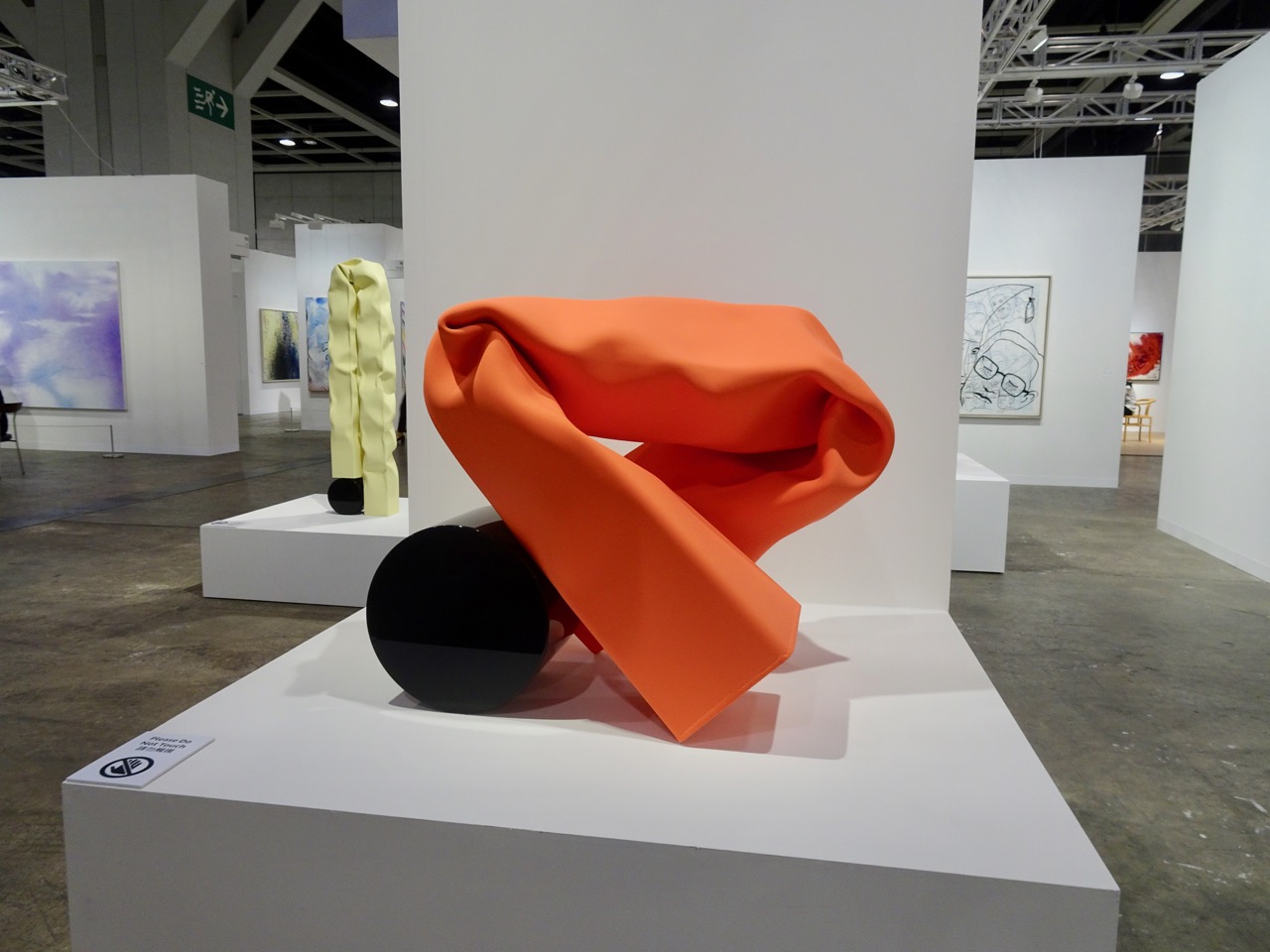
A set of four orangey red and lemon yellow painted-steel sculptures by Swiss artist Carol Bove(b. 1971), featured in David Zwirner's booth, is characterised by intricate folds that explore steel's formal and poetic possibilities. 

Combined with highly-polished black discs and in dialogues with each other, these twisted forms look astonishingly flexible and lightweight.  Though they can be perceived as human shapes, interpretations are open-ended, and that's why the pieces are so engaging and compelling.


 Aki Inomata, Why Not Hand Over a "Shelter" to Hermit Crab? - (Hong Kong Island), 2019  
Sculpture
Resin, 3D printing
5 × 5 × 4 cm

Maho Kubota Gallery 


Hermit crabs, the little crustaceans which don't have fixed shells of their own and always forced to migrate, have spurred the Tokyo-based artist Aki Inomata (b.1983) to build permanent shelters for them.   By appropriating accurate measurements from a real shell, Aki creates crystalline sculptures adorned with the skylines of NYC, Bangkok, Tokyo, Hong Kong, etc. Combining benevolence, imagination and scalable craftsmanship, what underpins this acclaimed project (2009-) is an inquiry into the sociopolitical issues of ownership, nationality and immigration. 


Zhang Yu, Tea Feeding, 2019
Work on paper, tea, xuan paper 
300 × 100 cm


Pifo Gallery 

Beijing-based Zhang Yu (b.1959) creates his xuan paper paintings not with ink, brushes and calligraphy but by willfully infusing it with tea stains. During his daily performance at around 4 p.m., he will cautiously pour tea to rows of bowls from a kettle and stop only when each bowl becomes full.  As such, tea gradually drips to formulate abstract brown rings on the paper. While subverting the traditional ideology centring on pen and ink, the artist stresses that his installation-based performance does not directly convey any messages except to reinterpret the nature of art.


Samson Young, Music While You Work, 2018

Installation
Drivable bumper car with custom-designed shell and audio Base: electronics and custom-designed audio tracks Shell: 3D printed nylon, soft pastel
  200 × 120 × 140 cm

 Edouard Malingue Gallery 
A signature eye-candy art piece in an art fair, this bumper car in the shape of a gigantic 3D-printed sneaker calls to mind fond memories of an amusement park. While it slowly meanders, the post-war theme song from the classic BBC radio programme ‘Music While You Work’ gradually becomes audible. Samson Young (b.1979), the multi-disciplinary artist and music composer from Hong Kong, strives to explore the dissemination of music and its hidden social commentary through provocative visual gadgets.


Cheyney Thompson, Set 1, 2019
storageDevice (1[a-g]), 2019
Acrylic on canvas; oil on canvas, various materials in acrylic binder on canvas
7 parts: 103.5 x 78.4 cm each


Andrew Kreps Gallery 


A new line of minimalist floor sculptures? What is in store for them? Anyone passes the booth are likely intrigued by these seven sleek metallic rectangular boxes, entitled storageDevice by New York-based artist Cheyney Thompson(b. 1975).  He has long developed a painting practice based on self-imposed constraints and has accumulated seven typologies exemplified by the seven canvases hung on the booth wall. 

Each storageDevice houses a unique set of seven paintings - monochromes, abstractions, appropriations of Ruben's painting in greyscale, among others - but only one from each device can be on view at a given time.  

Leung Chi Wo, A Countess From Hong Kong, 2016

Installation
Belilios Public School uniform, cloth hanger, 1967 Hong Kong 50-cent coins, vinyl record This Is My Song by Petula Clark (1967), motor system


134 × 68 × 19 cm

Blindspot Gallery 

"The Countess of Hong Kong", named after Charlie Chaplin's last film, depicts a swinging schoolgirl uniform while playing a vinyl record of a UK pop "This is my song" by Petula Clark -  narratives that look irrelevant yet vividly assembled the occurrences in 1967. 

Leung Chi Wo (b.1968),  through meticulous archival research, gathers fragments of historical events to re-examine the "Hong Kong 1967 leftist riots".  Subtly portraying a bygone era of turmoil, his kinetic installation attempts to negotiate a solution for the precarious future.

                                    
Jose Davila, The Most Famous Problem in the History of Mathematics is That of Squaring the Circle IV, 2019
Painting
Silkscreen print and acrylic paint on loomstate linen
260 × 300 × 6 cm 


OMR 


Unlike many of Jose Dávila's (b.1974) works which provoke discourse, the Mexican artist has come up with an alternative solution to an ancient mathematical question - "squaring a circle", metaphorically represents the ordeal to achieve something impossible.  Through this wall sculpture of 11 separate canvases, the artist let the circle and squares interact and conform with each other, exemplifying notions of equilibrium, stability and permanence.


Zhao Zhao, In Extremis, 2018
Installation
Brass, stainless steel, black iron, blue steel, asphalt


Tang Contemporary Art


This ground installation resembles an ordinary road surfaced with asphalt which we take for granted. But in close inspection, it is inlaid with pieces of metallic plates, representing the flattened dead bodies of stray cats being smashed by vehicles across a busy road in Beijing. Zhao Zhao (b.1982), an emerging Chinese artist and once an assistant to Ai Weiwei, has turned what he witnessed into a eulogy which laments the lack of empathy in our contemporary culture.   In Extremis was the title of the artist's solo exhibition which featured this concept in 2018.

Lee Bul, Willing to be Vulnerable - Metalized Balloon, 2019
Installation
Nylon taffeta cloth, polyester with aluminium foil, fan, electronic wiring
230 ×  230 × 1000 cm


Galerie Thaddaeus Ropac, Lehmann Maupin, PKM Gallery

Drawing inspirations from the infamous Hindenburg zeppelin and its well-documented destruction in 1937, Korean artist Lee Bul (b.1964) has created a 10 metre long floating silver balloon that mimics the airship to symbolise the crushed dreams of modernity in the early 20th century. 

Confronted with this compelling installation, we are at once bewildered by its sensational existence and obliged to ponder humanity's obsession with perfection and utopian ideals.


Jong Oh, Line Sculpture, 2018
Installation
Metal rod, string, paint, fishing wire, chain

Sabrina Amrani 

New York-based Korean artist Jong Oh (b.1981) is described as a composer of space, and there is a certain poetic quality that permeates his work. For this occasion, he creates several almost invisible line sculptures made with strings, fishing wire and thin metal rods, alongside some wall-fixed minimalist white sculptures. 

Upon entering his immersive space, there is no reason not to slow down our pace, wondering whether that subtle line is a string or a pencil line, and that cast shadow is real or just an optical illusion. 


Top Booths


                                                             Sean Kelly - New York


Matthew Marks Gallery - New York, Los Angeles

                                        
Project Native Informant - London

                                          
Tang Contemporary Art - Beijing, Krung Thep Maha Nakhon, Hong Kong

                                  
                                           10 Chancery Lane Gallery - Hong Kong

                               
                                                  Ink Studio - Beijing, Seattle


Konig Galerie - Berlin, London


Leeahn Gallery - Seoul, Daegu


Pi's Artworks - London, Istanbul


Nanzuka - Tokyo